Disclosure: The content on this page includes affiliate links. While clicking on these links won’t cost you anything extra, we may earn a modest commission from any purchases.

Our cruise stop in Lanzarote in December 2025 was a complete success thanks to a rental car. We had booked with Cicar at the port and opted for full insurance, which meant a hassle-free pickup and return with no inspection. Driving on the island was easy: the roads are well-maintained, traffic is calm, and speed limits are sensible, although the wind and occasional gravel sections call for extra care. In a single day, we managed to visit Timanfaya National Park (Islote de Hilario), the Echadero de los Camellos area, and Playa de Papagayo, even though entering the park required queuing, and the road to the southern beach was in poor condition. The rental car gave us the freedom to see several highlights in a short time, and we highly recommend it for cruise stopovers in Lanzarote.
We stopped for a day in Lanzarote during our Canary Islands cruise in December 2025. We had booked a rental car in advance to be waiting for us at the port so we could explore the island at our own pace, while many other passengers opted for organised bus tours. Lanzarote won us over with its rugged nature and quiet roads.
On cruises, renting a car is often a smart choice because organised excursions are expensive. Driving yourself lets you see more, and the cost per person is usually lower than tours, especially with a larger group.
Renting a Car
We usually compare rental cars via Discover Cars, but during our Lanzarote cruise stop, suitable rental options were limited. We wanted a car directly at the port, where only a few companies have offices. We chose Cicar because the price was reasonable, the office was in the port, and comprehensive insurance was included.
The daily rental cost 79 euros with comprehensive insurance, which isn’t the cheapest in the Canaries. The excellent port location of the rental office was a key factor in the price. We chose zero-excess coverage so we could return the car without a separate inspection and drop the keys in the rental office’s mailbox before heading back to the ship.
Picking Up the Rental Car
We had reserved a Fiat 500, but we received a sport-model Ford Fiesta. It was a solid, no-nonsense car: roomy enough, easy to drive, and the right size for the island’s roads. While it wasn’t a luxury car, it worked beautifully and made the day a success.
The rental company handed over the paperwork at the port office, where we signed the contract and paid. Thanks to the comprehensive insurance, there was no separate initial inspection. We found the car ourselves in the port parking lot, returned it there in the evening, and left the keys in the mailbox outside the office.

Our Driving Route
With only about eight hours available, we picked a few stops in advance. We left the port of Arrecife and drove to Timanfaya National Park, first to the Echadero de los Camellos activity area, where we paused briefly for photos. We didn’t do the camel ride, as it’s unethical. We then continued to the park’s main visitor area, Islote de Hilario, where we stayed for several hours. To end the day, we headed to Playa de Papagayo, one of the best-known beaches in the south. Although the day wasn’t particularly hot, it was warm enough for a swim.
Echadero de los Camellos
On the way to Timanfaya National Park, we stopped briefly at the Echadero de los Camellos area to take photos in the sunshine and breathe in the fresh air amid the volcanic landscape. The open lava field and peaceful surroundings made it a pleasant spot for a short break.

The area is known for camel rides offered to visitors along the edge of the lava fields. There’s also a small information point explaining the traditional role of camels in Lanzarote’s daily life. Our stop was short, but it worked well as a breather and photo spot amid Timanfaya’s stark scenery.
Islote de Hilario
We visited the main area of Timanfaya National Park at Islote de Hilario, also known as Montañas del Fuego. You arrive by car via the entrance on the LZ-67, where you pay the admission fee before driving into the parking area. Contrary to what you might assume, you don’t enter via the nearby visitor centre. The ticket includes parking, geothermal demonstrations, and the famous Ruta de los Volcanes bus tour through the park’s lava fields.
We parked in an almost full lot, but the individual spaces were generous. From the parking area, it was just a few meters to the visitor zone, where the bus tour starts and where you’ll also find the El Diablo restaurant and viewpoints over the volcanic scenery.


You can’t drive your own car in the park, so the included bus tour is essentially the only way to see the core volcanic landscapes. The route follows narrow, winding roads without guardrails, so if you’re uneasy with heights, it can feel a bit thrilling. The views are exceptional, and the bus tour is the undeniable highlight. Including the wait, it took about an hour.

The park also hosts demonstrations that showcase the heat of the ground. You can also see how geothermal heat is used, for example, to cook food. The El Diablo restaurant is on-site, where you can eat and enjoy coffee in a unique setting.
A visit to Timanfaya’s Islote de Hilario can easily take time. Although parking ultimately went smoothly, we queued for about an hour to enter the lot because only a limited number of cars are admitted at a time. Plan at least a couple of hours for the visit; you could easily spend several hours or the whole day there, though we stayed for a shorter time due to our tight schedule.

Playa de Papagayo
The long beaches in the south are Lanzarote classics. We visited Playa de Papagayo, part of a protected nature area known for its clear water and sheltered cove. Driving to the island’s south was quick and easy on good roads, but the final roughly half-hour was on an unpaved, at times very rutted dirt road.

The road called for unhurried driving, and had we known its condition in advance, we might have chosen a different beach. On arrival, parking was free, there was plenty of space, and we could park right by the sand. The beach itself was gorgeous and worth the visit, even if getting there required a bit of patience.

Return to the Port and Car Drop-Off
Before returning the car, we searched Google Maps for a gas station near Arrecife, drove there, and added a little fuel so the level matched the pickup. At the port, drop-off was easy: after parking, we left the keys in the mailbox and walked back to the ship without anyone needing to inspect the car. This was one reason we chose comprehensive cover—we wanted a quick, stress-free return.

Our Driving Experience on Lanzarote
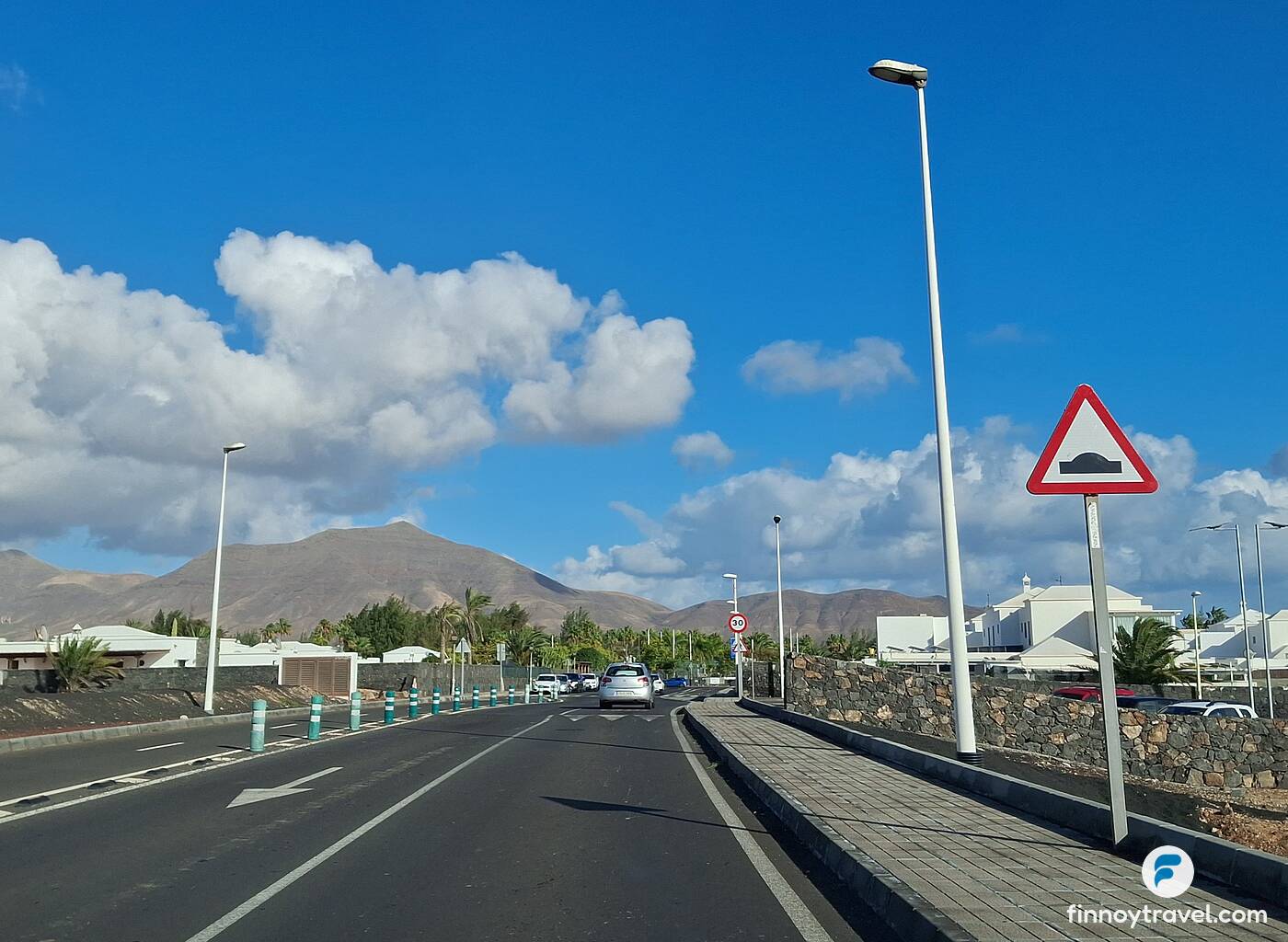
Driving on Lanzarote was relaxed and straightforward. The roads are mostly in good condition, there are a few intersections and traffic lights, and nothing particularly surprising cropped up while driving. Getting around the island feels clear and logical, which made driving enjoyable even with limited time.
Transfers between sights were quick, and parking was easy and free at most places. The only exception was the rougher roads leading to the southern beaches, which clearly slowed progress and required an unhurried approach.

In Arrecife, we mostly drove through the city. Urban driving was slower than on the highways, but traffic didn’t feel congested. On the contrary, the city seemed pleasant and easy to navigate, and driving there wasn’t stressful.
During the day, we had time to visit several places, stop at viewpoints and small villages, and drive across the inland lava fields before returning to the port. A rental car made it possible to see the island’s diverse landscapes at our own pace. Despite the good roads, it’s worth planning your route.
Overall, driving on Lanzarote was easy and pleasant: the roads are in good condition, traffic is calm, and transfers between sights are quick. Parking was effortless almost everywhere, and the only real challenges were wind on open stretches and the gravel roads to the southern beaches. With a rental car, we were able to see several of the island’s highlights in a short time at our own pace.
Good To Know About Driving on Lanzarote
Lanzarote’s Roads and Driving Conditions
Lanzarote is a lava-stone, rugged island with mostly straight, well-maintained main roads and a short ring road around Arrecife. There are plenty of smaller roads, but few mountain routes. The island is compact, so you can see a lot in a day, and the lack of steep mountain roads makes getting from place to place easier. You still can’t cover everything, so it’s wise to pick a few stops in advance.
Road conditions on Lanzarote are generally good, and traffic is fairly smooth. Driving is similar to the rest of the Canary Islands: vehicles keep to the right, road signs are clear, and congestion is rare. The island has a few main arteries (such as LZ-1 north and LZ-2 south) that are wide and well-maintained, making long transfers easier than routes that involve mountain roads.

Smaller roads, especially those leading to beaches and near nature areas, can be narrow and at times uneven or gravel. Drive calmly, watch for oncoming traffic, and take extra care. If you’ve driven on Fuerteventura, on El Hierro or on Gran Canaria, driving on this island will feel familiar.
Traffic Rules
Lanzarote’s traffic rules are familiar to many Europeans.
- Drive on the right-hand side.
- A vehicle approaching from the right has priority unless signs or lights indicate otherwise.
- You must come to a complete stop at STOP signs and yield. These are common.
- In towns and cities, pay special attention to pedestrians.
Speed limits follow Spain’s rules, but in practice they are slightly lower on Lanzarote. In built-up areas, the limit is usually 50 km/h (sometimes less), on main roads typically 70–90 km/h, and on the few faster stretches up to 100 km/h. Limits often change near junctions, bends, and settlements, so keep a close eye on the signs.
Driving Tips
Traffic is usually calm,m and roads are in good condition on Lanzarote, but it still pays to keep a generous following distance. On straight stretches, speed can creep up unnoticed, and you may share the road with slower vehicles or cyclists. Adequate distance gives you time to react if the car ahead brakes suddenly for a junction, roundabout, or turn lane.
Wind is one of the most typical driving challenges on Lanzarote, especially on open stretches and near the coast. Gusts are particularly noticeable in a light rental car, and you may need to correct the steering more than usual. Slow down, keep both hands on the wheel, and avoid sudden inputs if the wind picks up or the road runs through completely open terrain.

Parking is easy and often free at most sights, but popular attractions and beaches can fill up around midday. Plan your route to arrive at the busiest spots either early or late in the afternoon. This makes finding a space easier and creates a calmer visit overall.

Near nature spots and more remote beaches, you may encounter narrower roads or gravel sections. Drive them slowly, keep your speed low, and leave room for oncoming traffic, as there are fewer passing places. Also, check your rental terms: not all insurance covers driving on gravel roads or stone damage, so use discretion when choosing your route.

Bottom Line
Lanzarote proved to be an excellent destination for independent exploration by rental car, especially during a cruise stop. The island is compact, the roads are good, and transfers are quick, allowing you to see several sights even with limited time. A rental car gave us the freedom to move at our own pace and to see far more than would have been possible on organised tours.
In one day, we experienced both Timanfaya’s striking volcanic landscapes and Playa de Papagayo’s clear-water beach—the contrast between the stark lava fields and the sheltered sandy cove captured Lanzarote’s variety well. Although the southern dirt road slowed us down, the overall experience was worth the effort.
If your cruise stops in Lanzarote, a rental car is a highly recommended way to explore the island. Driving is easy, parking is straightforward, and the sights sit within sensible driving distances of each other. In a single day, you can experience a surprising amount of this volcanic, distinctive island—yet there’s still plenty left for future trips.
The commenting feature has been removed due to low usage. The discussion continues in our Facebook group — you’re welcome to join!